




Why Holidays Stress Your AC
A typical DFW home in July is already asking a lot of its air conditioner. Add a house full of guests, an oven running most of the afternoon, extra bodies generating heat, and doors opening and closing every few minutes, and you have a recipe for a system that struggles to keep up. Every person in a room adds heat load, every open door lets in 100-degree air, and every extra load of dishes or laundry adds humidity that your AC then has to remove.
Most residential systems in Irving and the surrounding Metroplex are sized for normal household occupancy, not a backyard barbecue with 20 people. That does not mean your AC is undersized for holiday gatherings, but it does mean a little preparation goes a long way toward avoiding a warm, sticky house right when you want it to feel its best.
Pre-Party Checklist
A few simple steps in the days before a gathering can make a real difference:
- Replace or check the air filter. A dirty filter restricts airflow and is one of the most common reasons a system runs constantly without cooling effectively.
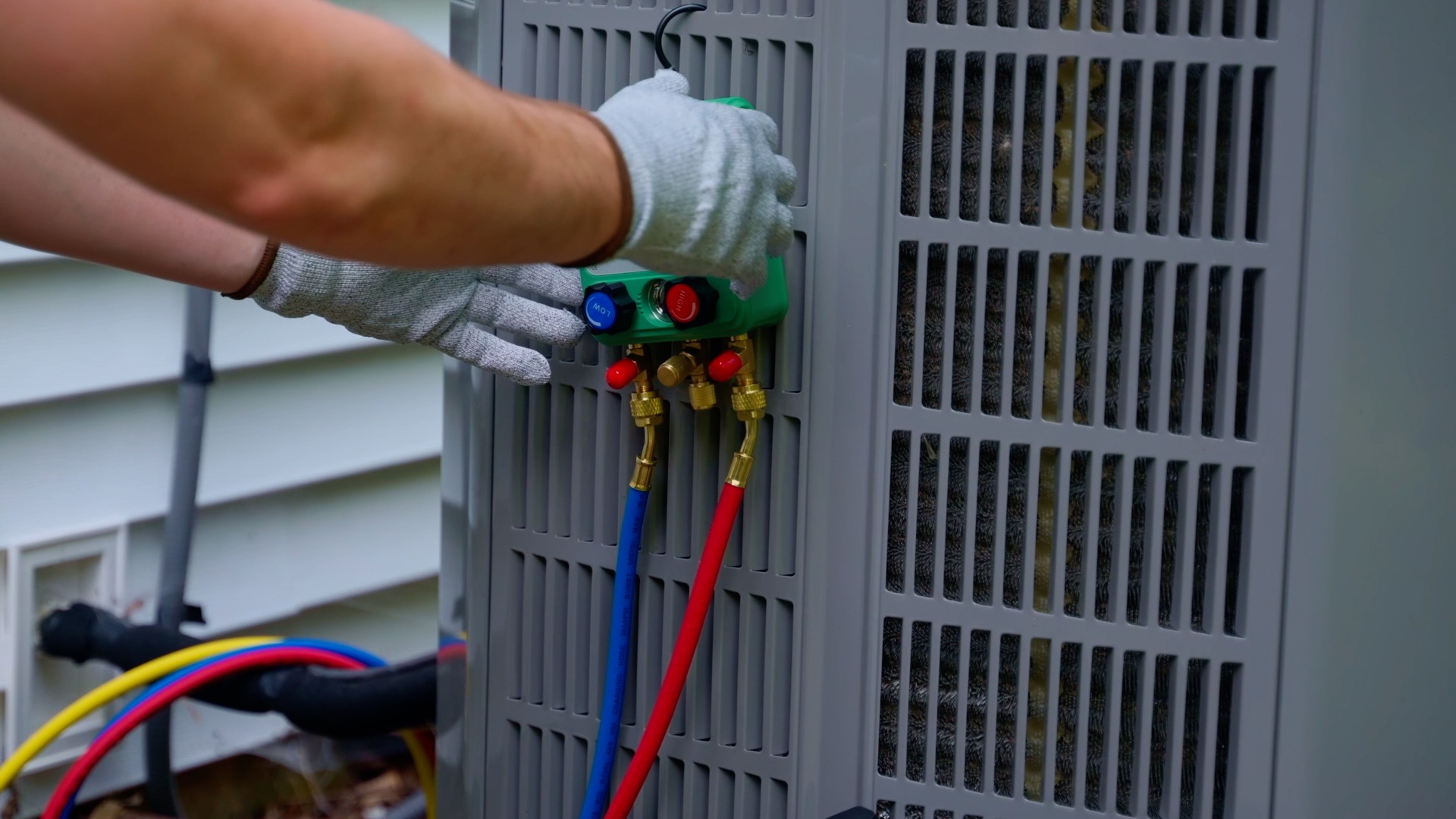
- Clear the area around your outdoor condenser unit. Grass clippings, leaves, and stored patio furniture can block airflow and reduce efficiency right when you need full capacity.
- Test the system a day or two ahead, not the morning of. Running the AC in advance gives you time to call for emergency service if something is not working, rather than discovering a problem with guests already on the way.
- Check supply vents throughout the house to make sure furniture, rugs, or holiday decorations are not blocking airflow.
- Consider having your ductwork inspected if certain rooms never seem to cool evenly; a professional look at your ductwork can reveal leaks or disconnected sections that get worse under heavy use.
Thermostat Strategy for a Full House
One mistake we see often is dropping the thermostat several degrees right before guests arrive, hoping to "pre-cool" the house. This can actually work against you. Most residential systems cool at a fairly fixed rate regardless of the setpoint, so setting the thermostat to 65 does not cool the house faster than setting it to 72 — it just runs longer and can lead to excess humidity removal issues or short cycling if the system overshoots.
Instead, start cooling the house two to three hours before guests arrive, setting the thermostat two or three degrees below your normal comfort level. This gives the structure itself — walls, furniture, flooring — a head start on absorbing the heat load that is about to arrive. If you have a smart thermostat, a temporary schedule override for the day is often built into the app.
During the event, resist the urge to keep adjusting the temperature. Frequent changes can cause the system to cycle inefficiently. Pick a target, let the system work steadily, and use ceiling fans in occupied rooms to improve comfort without demanding more from the compressor.
Managing Kitchen and Grill Heat
Ovens and stovetops add a surprising amount of heat and humidity to a home, especially during a holiday cooking marathon. Running your kitchen exhaust fan whenever the oven or stovetop is in use helps vent that heat outside rather than letting your AC fight it room by room. If you are grilling, keep the grill well away from doors and windows so heat and smoke are not pulled back into the house every time someone goes in or out for another platter of food.
It also helps to close doors to unused rooms during the party. Concentrating airflow toward the kitchen, living room, and patio access points keeps the busiest areas comfortable without wasting cooling capacity on bedrooms nobody is using that day.
What We See on Holiday Service Calls
Over decades of serving DFW families, our technicians have noticed a clear pattern around major summer holidays: service calls spike the day after a big gathering, not during it. Systems that were already borderline — low refrigerant, a struggling capacitor, a dirty coil — often make it through the party on sheer thermal mass and then finally give out once the extra load and extended runtime catch up with them.
We have walked into more than one Irving or Grand Prairie home the morning after a Fourth of July cookout to find a system that ran nearly 20 hours straight and simply could not take any more. In most of those cases, the underlying issue had been building for weeks, and the holiday gathering was just the final stress test. This is exactly why a pre-holiday check is worth the effort — catching a weak capacitor or a dirty coil before the party is far less disruptive than losing cooling with a house full of guests.
Avoiding Emergency Breakdowns
If your system is more than 10 years old, has needed repairs recently, or you simply cannot remember the last time it was serviced, a holiday gathering is not the time to find out how much life it has left. A quick maintenance visit beforehand can identify weak components — capacitors, contactors, refrigerant levels — before they fail under the added load of a full house.
Homeowners enrolled in our Comfort Maintenance Plan get priority scheduling and routine inspections that catch these issues well before a holiday weekend arrives. If something does go wrong despite your best prep, our emergency service line runs around the clock, including holidays, because we know a broken AC does not wait for a convenient time.
Keeping Guest Rooms Comfortable Overnight
Overnight guests add a different kind of load than a daytime gathering. Bedrooms that are normally closed off and barely conditioned suddenly need to hold a comfortable temperature for hours, often with the door shut and minimal airflow if the room sits at the end of a duct run. If a guest room has historically run warmer than the rest of the house, a holiday weekend with the room actually occupied is when that problem becomes obvious rather than theoretical.
A day or two before guests arrive, turn on the AC and physically check airflow at the guest room's supply vent alongside a vent in a room that always feels comfortable. If the guest room's airflow feels noticeably weaker, check for a closed or partially closed damper, furniture blocking the vent, or a door that has been kept shut long enough to restrict return airflow back to the system. Cracking the bottom of an interior door an inch, or leaving a jump duct or transfer grille unobstructed if the room has one, helps the room maintain pressure balance with the rest of the house overnight.
Ceiling fans set to run counterclockwise in summer help guests feel more comfortable at a slightly higher setpoint without adding to the system's load, and a small portable fan is a reasonable backup for a room that consistently runs warm despite these steps. If the gap persists across multiple gatherings, it is worth having a technician measure airflow at that specific register, since a persistently warm guest room is often a sign of a duct restriction rather than something guests just have to live with.
Get Ready Today
A little preparation is the difference between a house that stays comfortable all afternoon and one where everyone is hovering by the vents. If it has been a while since your system was checked, or you just want peace of mind before the next big gathering, call Spencer Air Conditioning & Heating at 972-446-2665. We will make sure your system is ready for whatever the guest list — and the Texas heat — throws at it.
Spencer Air Conditioning & Heating — Serving DFW Since 1960. License TACLA115636C